Map of the Surname Pindar in United Kingdom and in the World
Data Exploration
Immersing ourselves in the analysis of the geographical distribution of surnames takes us on a journey to the past, a look at the migration of families over the centuries. In this study, we will delve into the history of the surname Pindar in United Kingdom and around the world, unearthing records that reveal unexpected connections and population movements that have shaped its presence in different geographies, both nationally and internationally.
Study of the dispersion of the Pindar family lineage in United Kingdom territory

History of the Pindar Family Lineage
The history of the Pindar family dates back to ancient times. This lineage has been linked to different territories and traditions of United Kingdom, which has influenced its expansion through different geographical areas over the centuries.
Procedure
In order to carry out this study, information from civil registries, censuses and other sources of data, both old and current, was collected. Subsequently, a meticulous process of organization and analysis of the data was carried out with the purpose of identifying the areas with the greatest presence of the surname Pindar, as well as to discover possible significant patterns in its dispersion.
Results
General Distribution
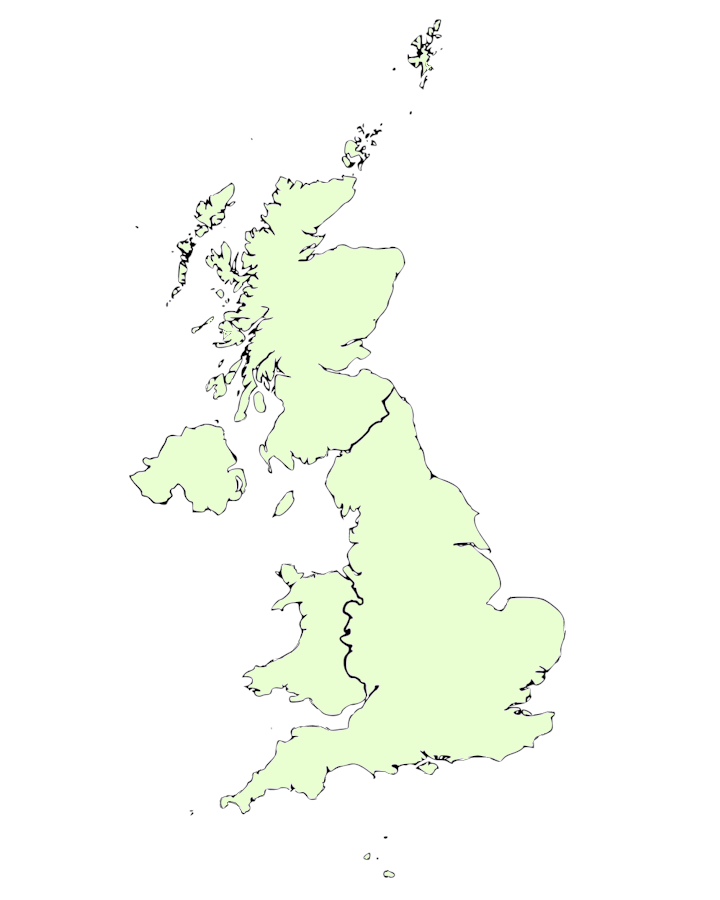
The graph below illustrates in a general way the geographical distribution of the surname Pindar in the country United Kingdom. On this map, you can see the areas with the greatest predominance of the surname represented by more intense tones, while the areas with less presence of the surname are clearly differentiated.
High Concentration Areas
Places with high concentrations of the surname Pindar are found in several regions of United Kingdom. These areas have traditionally been centers of economic and cultural activity, which has contributed to a greater presence of the surname Pindar. The importance of these areas can be linked to various factors such as migration, the economy and other socioeconomic aspects.
Regions with Low Concentration
On the other hand, in the territories with a lower presence of the surname Pindar, we mainly find United Kingdom regions that are less urbanized or with a smaller population. These areas may have experienced less migratory flow or mobility of individuals with this surname, which could be attributed to aspects such as topography, economic situation or particular social dynamics.
Historical Analysis
In historical terms, the spread of the surname Pindar in United Kingdom has been shaped by a series of significant events, among which migratory movements, both internal and external, war conflicts and changes in the political landscape stand out. For example, at various times in the past, an increase or decrease in the presence of the surname in certain geographic areas can be observed. These phenomena may be related to specific events such as mass migrations, armed conflicts or relevant government decisions.
Demographic Factors
Migration
One of the most influential demographic factors in the distribution of the surname Pindar has been, without a doubt, migration. Both internally and externally, population movements have had a significant impact on the dispersion of the surname in different regions of United Kingdom. Migratory groups arriving from various parts have contributed to enriching the presence of the surname in these areas, while people who have emigrated from United Kingdom to other countries have also influenced the internal distribution of the surname.
Urbanization
The phenomenon of urbanization has caused a marked centralization of the surname Pindar in urban areas of United Kingdom. The job and educational possibilities in these urban centers have motivated families with the surname Pindar to settle in these cities, increasing their presence in these metropolitan areas.
Sociocultural Changes
The evolution of United Kingdom has had a significant impact on the way the surname Pindar is distributed. As certain sociocultural aspects have changed in the country, so has the geographical distribution of this surname. For example, the migration of people to urban areas in search of job opportunities has contributed to the surname Pindar being concentrated in cities where economic activity is more dynamic.
Distribution of the Surname Pindar in the World
Global Expansion of the Surname Pindar
The surname Pindar is one of the most widespread worldwide, with a presence not only in United Kingdom, but also in various countries around the world. Migration and diaspora have been determining factors in the dispersion of this surname throughout different regions.
The history of the surname Pindar is a reflection of human mobility throughout the centuries. Since its origins in United Kingdom, this surname has traveled across continents and oceans, establishing roots in different cultures and societies.
The geographical diversity in which the surname Pindar is found is a testament to the global interconnection in which we live. Each corner of the world that bears this surname has a unique history that contributes to the wealth and plurality of humanity.
Main Countries of Presence
The surname Pindar has become prominently established in multiple nations around the world. These territories have witnessed a considerable migratory flow from United Kingdom, which has contributed to the surname spreading throughout different regions. Migration, motivated by various reasons such as the search for economic opportunities, evasion of adverse political situations or obtaining a quality education, has been decisive in the spread of this surname.
 Nigeria
 England
 United States
 India
India Israel
 Canada
 Guyana
 Australia
 Argentina
 Saint Lucia
 Scotland
 Chile
Chile Brazil
 Italy
Italy Switzerland
 Dominican Republic
 France
 Wales
Wales Hong Kong
 Malaysia
 New Zealand
 Pakistan
 Poland
 Slovenia
 Slovakia
 Trinidad and Tobago
 Ukraine
Influence of Geography on Surnames
The geographical origin of surnames has proven to be a key factor in their global distribution. Throughout history, multiple events have triggered mass migrations of people with the Pindar surname, dispersing it across various countries and continents. This phenomenon has been driven by the search for new opportunities and better living conditions.
Overall Conclusion
The Pindar lineage has demonstrated a surprising capacity for adaptation and propagation in different corners of the planet. Its presence on various continents not only reflects the migratory chronicle of United Kingdom, but also the integration and contribution of those who bear this surname in various international societies. The analysis of its dispersion provides an enriching narrative about how migratory movements and settlement processes have influenced the identity and representation of this surname at a global level.
In summary, the examination of the distribution of the surname Pindar both in United Kingdom and on a global scale reveals fascinating patterns and provides an in-depth look at the history and demographic evolution of both the country and the global diaspora.


