Map of the Surname Maba in United Kingdom and in the World
Exploring geographic diversity
Immersing yourself in the analysis of the geographical distribution of surnames is like opening a history book, full of stories about migrations, settlements and adaptations over the centuries. In this investigation, we will delve into the exciting world of surnames, in particular the surname Maba, to unravel its mark on United Kingdom and the rest of the world. Through this journey, we will unearth historical connections, demographic clues, and cultural patterns that have shaped the presence of this surname in different regions of the country and globally.
Geographic analysis of the Surname Maba in United Kingdom

History of the Surname Maba
The history of the surname Maba is fascinating and dates back to millennia. This surname has been linked to different territories and traditions of United Kingdom, which has influenced its spread to various corners of the world over the centuries.
Research focus
In the search to understand the history and dispersion of surnames, exhaustive research was carried out in civil registries, censuses and other relevant sources of information. In order to map and analyze the presence of the surname Maba, a meticulous process of data collection and organization was carried out.
The detailed analysis allowed us to identify the geographical areas where the surname Maba has a greater incidence, as well as detect possible significant patterns in its distribution throughout United Kingdom. This methodical and rigorous approach provided a novel and illuminating vision of the descent and extension of this surname in the historical and contemporary context.
Results
General Distribution
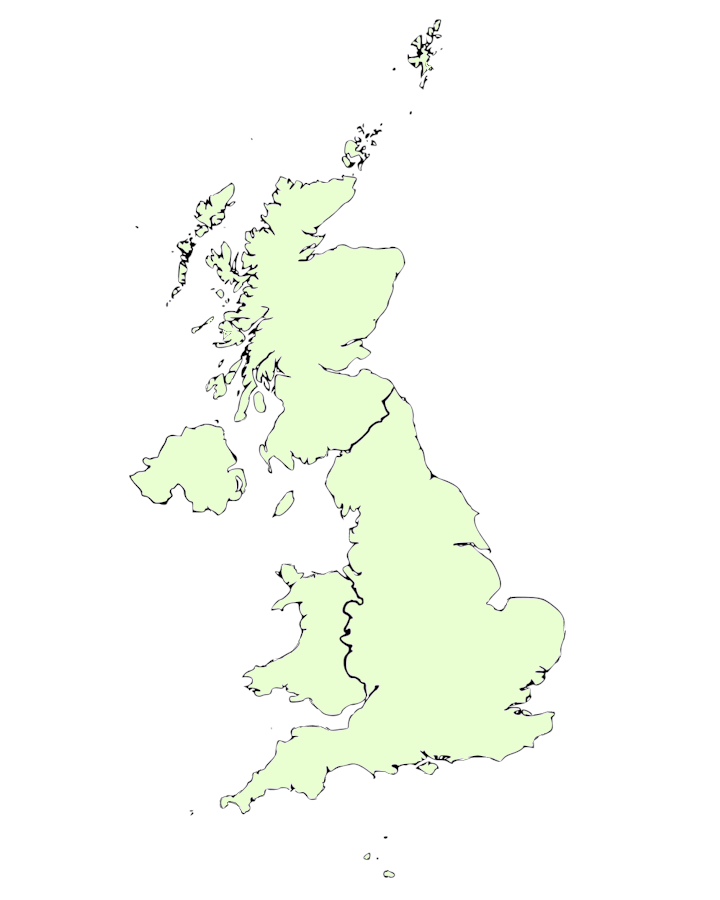
In the graphic representation you can see the geographical dispersion of the surname Maba in United Kingdom. The places with a greater concentration stand out in striking tones, while the areas with a lower presence of the surname are shown differently.
Regions with High Concentration
The areas with the highest concentration of the surname Maba cover multiple areas of United Kingdom. These places, which over time have been prominent centers of economic and cultural development, have led to a marked presence of the surname Maba. The notable incidence in these places may be linked to factors such as population mobility, financial situation and other relevant socioeconomic aspects.
Areas with Low Presence
On the contrary, regions with a low concentration of the surname Maba tend to be those that have a lower population density or that are characterized by their rural character. In these places, it is possible that the presence of people with this surname is limited due to various factors such as the lack of job opportunities, the geography of the place or social dynamics.
Genealogical Analysis
After a careful analysis, it can be seen that the distribution of the surname Maba in the territory of United Kingdom has been marked by a series of momentous events throughout history. From mass migrations to war conflicts, through changes in political power, each of these factors has left an indelible mark on the dispersion of this lineage.
For example, in certain time periods, a notable increase or decrease in the presence of the surname can be seen in certain geographical areas. This phenomenon may be related to specific situations such as migratory movements, armed confrontations, or government decisions that have directly affected the demographic dynamics of the region.
Demographic Factors
Population Movement
Population movement, both internally and externally, has been a determining factor in the dispersion of the surname Maba. Various migratory groups have arrived in various regions of United Kingdom, which has contributed to increasing the presence of the surname in these areas. Likewise, emigration from United Kingdom to other countries has had a significant impact on the internal distribution of the surname.
Urbanization
The evolution of cities has led to a notable change in the distribution of the Maba surname within the urban areas of United Kingdom. Urbanization has generated a phenomenon where job and educational opportunities have served as magnets for families carrying the surname Maba, causing their greatest concentration in these metropolitan areas.
Cultural Changes
In recent years, changes in the culture and economy of United Kingdom have had a significant impact on the distribution of the surname Maba. Globalization and modernization have led to changes in people's preferences and lifestyles, which in turn have influenced population mobility and migration. This has contributed to the geographic dispersion of the surname Maba, with a greater concentration in certain regions where economic and cultural opportunities are more promising.
Distribution of the Surname Maba in the World
Global Expansion of the Surname Maba
The surname Maba not only has roots in United Kingdom, but has also spread throughout the world as a result of emigration and the dispersion of populations. This section analyzes how and why the surname Maba has spread to different corners of the planet.
Main Countries of Presence
The surname Maba is recognized in various countries around the world. The history of the surname has spread across different regions, influenced by migrations that have taken place since United Kingdom. This mobility has contributed to the growth and roots of the surname in the aforementioned territories. Motivations of various kinds, whether economic, political or academic, have been decisive in this process of dispersion and consolidation.
 Togo
Togo Democratic Republic of the Congo
 Republic of the Congo
 Cameroon
 Brazil
 Philippines
 Nigeria
 Indonesia
 Mali
Mali South Africa
 Papua New Guinea
 Ivory Coast
 India
India Taiwan
 Niger
Niger France
 Israel
 Angola
 Turkey
 Malaysia
 Afghanistan
 Tunisia
 England
 United States
 Mexico
 Pakistan
 Thailand
 Singapore
 Senegal
 Chad
Chad Italy
Italy Canada
 Zambia
 Zimbabwe
 United Arab Emirates
 Belgium
 Russia
 Japan
Japan Kuwait
 Kazakhstan
 Liberia
 Argentina
 Netherlands
 Burkina Faso
 Benin
Benin Norway
 Poland
 Switzerland
 Portugal
 Saudi Arabia
 Costa Rica
 Sudan
Sudan Cuba
Cuba Germany
 Spain
Spain Ethiopia
 Fiji
Fiji Gabon
Gabon Uganda
 Iran
Iran
Influence of International Migration
The phenomenon of international migration has had a significant impact on the global dispersion of the Maba surname. Throughout history, relevant events have caused waves of migration led by bearers of this surname, who have moved to various regions of the planet. These movements are usually driven by the aspiration to find more prosperous horizons and more favorable living conditions.
Global Conclusion
The surname Maba has demonstrated a surprising ability to adapt and spread throughout the planet. Its presence on various continents not only reflects the migratory history of United Kingdom, but also the integration and contribution of those who carry it in different international societies. The examination of its dispersion offers an enriching story about how migratory flows and settlement processes have shaped the identity and representation of this surname at a global level.
In summary, the analysis of the distribution of the Maba surname in United Kingdom and on a global scale reveals fascinating patterns and provides a deep perspective on the history and demographic evolution of both the country and the global diaspora.


