Map of the Surname Koman in United Kingdom and in the World
Discovering the geography of surnames
Immersing ourselves in the analysis of how surnames are distributed in different regions allows us to travel through history, unraveling the paths that families have followed over time. In this fascinating journey, we will explore the presence of the surname Koman in United Kingdom and in different corners of the planet, revealing secrets that tell us about migrations, settlements and ancestral connections that have marked its presence throughout generations.
Geographical Analysis of the Surname Koman in United Kingdom
By exploring the dispersion of the surname Koman in the territory of United Kingdom, we can observe fascinating patterns that reveal the rich cultural diversity of this region. Every corner of United Kingdom keeps a unique story behind each bearer of this surname, connecting past generations with the present. This analysis invites us to reflect on the interconnection of families and communities in United Kingdom, demonstrating how a simple surname can serve as a common thread of traditions, roots and relationships that endure over time.

History of the Surname Koman
The genealogy of the surname Koman has its roots in ancient times. This lineage has been linked to different areas and traditions of United Kingdom, which has marked its expansion through different territories over the centuries.
Procedure
With the objective of carrying out this research, an exhaustive collection of data was carried out from civil registries, censuses and various sources, both ancient and current. The information obtained was carefully structured and analyzed in order to identify the areas with the greatest presence of the surname Koman, as well as to detect possible notable patterns in its dispersion.
Results
General Distribution
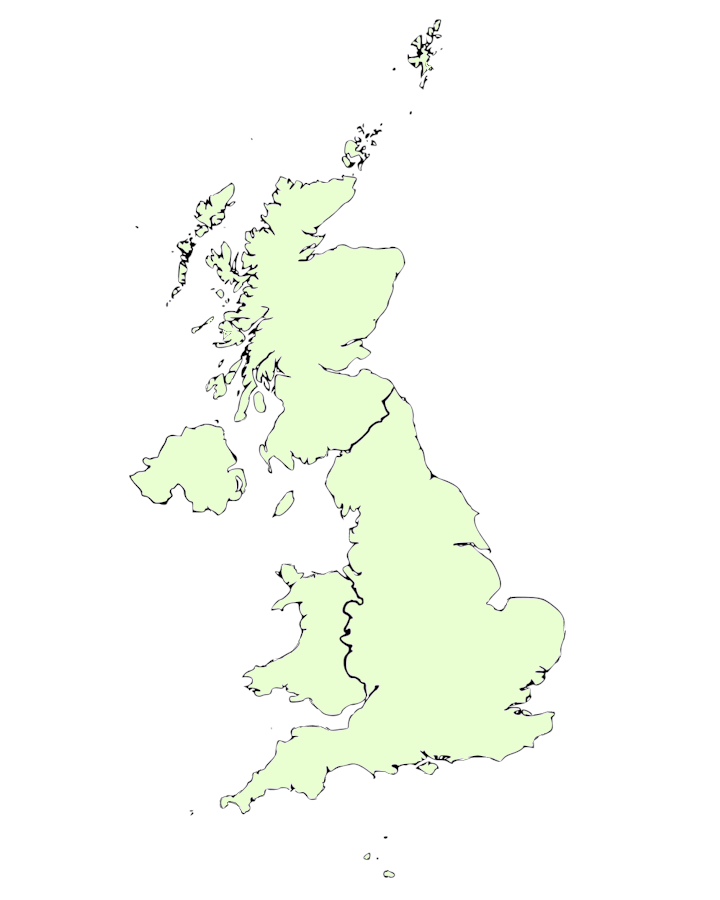
Look below at the map that reveals the distribution of the surname Koman in the country United Kingdom. The areas where this surname predominates are represented with striking colors, in contrast to those regions where its presence is scarcer.
High Concentration Areas
The areas with the greatest presence of the surname Koman are found in different regions of United Kingdom. These areas have traditionally been recognized as important hubs of economic and cultural activity, which has led to a greater concentration of the surname Koman. The marked presence in these places may be linked to phenomena such as migration, the economic situation and other sociocultural aspects.
Regions with Low Concentration
On the contrary, the places where the surname Koman has a scarcer presence tend to be those that are more rural or less densely populated. It is in these places where it is possible that the immigration or mobility of people with this surname has been lower, due to various factors such as geography, economic opportunities or social aspects.
Historical Analysis
In the course of history, the spread of the surname Koman into United Kingdom has been shaped by various momentous events, such as internal and external migratory movements, war conflicts and changes in power. For example, in certain historical periods, an increase or decrease in the presence of the surname in certain localities can be seen. This fluctuation could be related to particular situations such as mass migrations, wars or government political decisions.
Demographic Factors
Migration
The mobility of people, both within and outside their borders, has had a significant impact on the dispersion of the Koman surname. Migratory flows have contributed to the presence of this surname in different regions of United Kingdom, enriching the cultural and genetic diversity of these areas. Likewise, the emigration of individuals from United Kingdom to other nations has influenced the internal distribution of the surname, generating new connections and family ties in different parts of the world.
Urbanization
In the context of urban growth, it is interesting to note how the surname Koman has become concentrated in the cities of United Kingdom. This phenomenon is due to the diverse opportunities that urban environments offer, both in economic and educational terms, which has attracted numerous families with the surname Koman and has contributed to their greater presence in these metropolitan areas.
Demographic Changes
The transformations in the socioeconomic reality of United Kingdom have had a significant impact on the dispersion of the surname Koman. For example, the growth of certain economic sectors has generated movements of people to areas where these sectors are predominant, which is reflected in the geographical distribution of the surname.
Distribution of the Surname Koman in the World
Global Expansion of the Surname Koman
The Koman family lineage has a presence that extends beyond the borders of United Kingdom. The history of this surname is a reflection of human migrations and displacements over the centuries. From distant lands to remote corners, the surname Koman has found a home in various countries around the world.
Main Countries of Presence
The surname Koman is recognized in different countries around the world. The influence of this surname has spread throughout various territories, mainly as a result of migrations from United Kingdom. This phenomenon has contributed greatly to the proliferation and roots of the surname in these nations. The search for economic opportunities, the political situation or even the search for education have been determining factors in this dispersion process.
 Ivory Coast
 Poland
 Turkey
 United States
 Ukraine
 Iraq
Iraq Indonesia
 Thailand
 Netherlands
 Democratic Republic of the Congo
 Papua New Guinea
 Russia
 Japan
Japan India
India Slovenia
 Romania
 Slovakia
 Brazil
 Czech Republic
 France
 Yemen
Yemen Moldova
 Serbia
 Germany
 Nigeria
 England
 Australia
 Liberia
 Austria
 Belarus
 Benin
Benin Iran
Iran Kazakhstan
 Transnistria
 Belgium
 Spain
Spain Canada
 Pakistan
 Sweden
 Guinea
 Hungary
 Switzerland
 United Arab Emirates
 Croatia
 Mauritius
 Singapore
 Philippines
 Cameroon
 Algeria
 Uganda
 Uzbekistan
 South Africa
 Argentina
 Lebanon
 Burkina Faso
 Montenegro
 Mexico
 New Zealand
 Chile
Chile Saudi Arabia
 Scotland
 Equatorial Guinea
 Senegal
 Greece
 Togo
Togo
Influence of International Migration
The impact of international migration on the dispersion of the surname Koman is undeniable. Through historical episodes of great relevance, the movement of individuals carrying this surname to various regions of the world has been encouraged. Motivated by the hope of finding better horizons and quality of life, these migrants have contributed to weaving a global network of family connections and legacies.
Overall Conclusion
The surname Koman has stood out for its remarkable capacity for adaptation and dispersion in different corners of the planet. Its presence on various continents not only reflects the migratory history of United Kingdom, but also the integration and contributions of those who carry it in different international societies. The analysis of its distribution unfolds an enriching narrative about how migratory movements and settlement processes have influenced the identity and footprint of this surname throughout the world.
Ultimately, exploring the distribution of the surname Koman, whether in United Kingdom or globally, reveals fascinating patterns and provides an in-depth look at the history and demographic changes of both the country and the global diaspora.
Andere Sprachen


