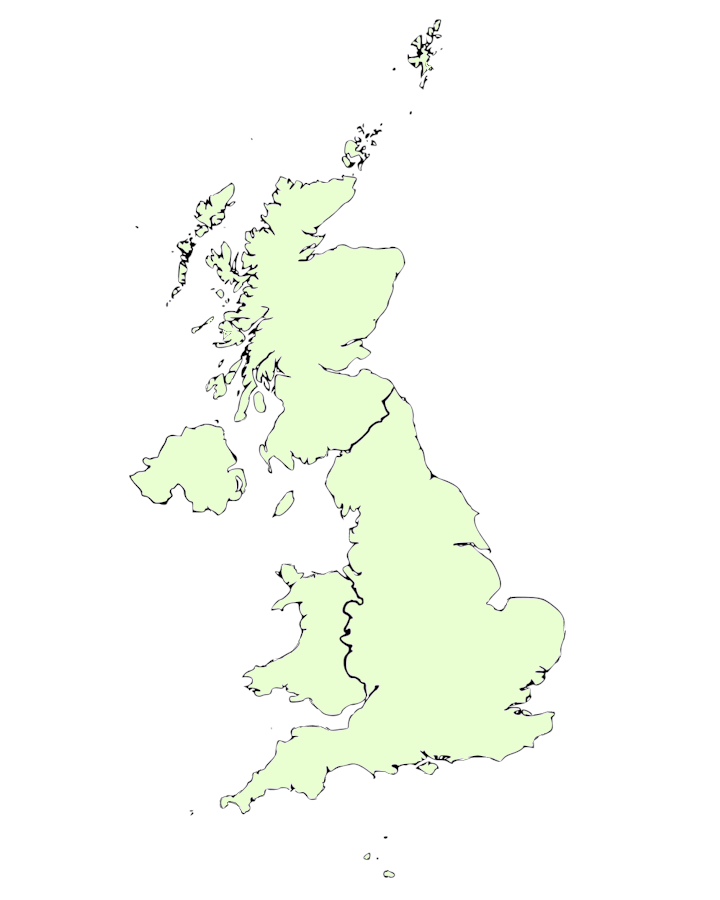
Map of the Surname Kaar in United Kingdom and in the World
Exploring history through surnames
To immerse yourself in the world of surnames is to embark on a fascinating journey through time. On this occasion, we will focus on the surname Kaar and its presence in United Kingdom, as well as in other corners of the planet. By analyzing its geographical distribution, we can discover clues that lead us to understand the migrations and settlements of families throughout history.
Exploring the presence of the surname Kaar in the country of United Kingdom

Origin of the Surname Kaar
To decipher the origin of the surname Kaar is to delve into the history of humanity. Over the centuries, this surname has traveled to different corners of the world, adopting the customs and traditions of United Kingdom, which has contributed to its geographical diversity.
Process
In carrying out this research, data was obtained from different sources such as civil registries, censuses and historical archives. Then, the organization and analysis of the information was carried out with the objective of identifying the areas with the greatest presence of the surname Kaar and detecting possible patterns in its geographical distribution.
Results
General Distribution
By looking at the map, you can generally see the distribution of the surname Kaar in the territory of United Kingdom. The areas where this surname has more presence are presented in striking tones, while those areas where its presence is scarce are represented differently.
Areas with High Concentration
The geographical points with the highest density of the surname Kaar are found in several areas of United Kingdom. These territories have traditionally been noted for being nerve centers in terms of financial and cultural activity, which has caused a notable increase in individuals with the surname Kaar. The considerable influence in these territories could be linked to variables such as population mobility, economic situation and other relevant socioeconomic elements.
Underrepresented Areas
On the other hand, the regions with the least presence of the Kaar surname tend to be those with the lowest population density or furthest from urban centers. In these areas, it is possible that the immigration or mobility of people with this surname has been limited due to various factors such as geography, job opportunities or sociocultural aspects.
Historical Analysis
Since ancient times, the presence of the surname Kaar in United Kingdom has been shaped by a series of significant factors, such as internal and external displacements, wars and changes in the political landscape. For example, in different historical periods, you can see an increase or decrease in the presence of the surname in certain areas. This phenomenon could be related to specific situations such as migrations, wars or government decisions.
Demographic Factors
Migration
The mobility of people, both within and beyond the borders of United Kingdom, has had a significant impact on the spread of the surname Kaar. Migratory groups from various origins have arrived in different regions of United Kingdom, which has contributed to the expansion of the surname in these areas. Likewise, the emigration of people from United Kingdom to other countries has also influenced the distribution of the surname internally.
Urbanization
Within the phenomenon of urbanization, we have observed how the Kaar surname has been notably concentrated in the urban areas of United Kingdom. Cities, by offering economic and educational opportunities, have been a magnet for families with this surname, causing their presence to increase significantly in these metropolitan areas.
Socioeconomic Changes
The dynamics of the socioeconomic structure in United Kingdom have had a significant impact on the geographical dispersion of the surname Kaar. It is evident that the growth of certain economic sectors has motivated migrations of individuals to areas where these sectors are relevant, which is clearly reflected in the territorial distribution of the surname.
Distribution of the Surname Kaar on the Planet
International Surname Growth Kaar
The presence of the surname Kaar is not limited only to United Kingdom, but has experienced global growth thanks to human mobility and dispersion. This section analyzes how and why the surname Kaar has spread throughout different regions of the planet.
Main Countries of Presence
The surname Kaar is recognized in multiple nations around the world. Various countries have witnessed the migration of individuals with this surname from United Kingdom, which has contributed to the spread and roots of the family in different territories. Mobility motivated by job opportunities, political situations or the search for new experiences has been decisive in the global expansion of this surname.
 India
India Austria
 Somalia
 United States
 Estonia
 Turkey
 Netherlands
 Nigeria
 Iraq
Iraq Russia
 Ireland
 Sweden
 Papua New Guinea
 England
 Liberia
 Pakistan
 Canada
 Mexico
 Kenya
Kenya Australia
 Switzerland
 Scotland
 Norway
 Germany
 Georgia
 Israel
 Kyrgyzstan
 Philippines
 Poland
 Iran
Iran Latvia
 United Arab Emirates
 Argentina
 Bangladesh
 Belgium
 Brazil
 Cameroon
 Saudi Arabia
 Cyprus
 Czech Republic
 Slovenia
 Thailand
 Egypt
Egypt Spain
Spain Finland
 France
 Wales
Wales Ghana
Ghana
Influence of International Migration
International migration has had a significant impact on the global dispersion of the Kaar surname. Throughout history, various events have led to the migration of families with this surname to different corners of the planet. This mobility has been driven by the search for new opportunities and greater well-being.
In each country where they arrived, people with the surname Kaar have contributed by enriching cultural diversity and contributing their knowledge and skills. Likewise, they have preserved their traditions and roots, keeping the heritage of their surname alive.
International migration has allowed the surname Kaar to become a symbol of the connection between different cultures and a unifier of people of diverse origins. Through this mobility, a global network of families that share a common bond has been forged, transcending borders and enriching the identity of each individual.
Despite the challenges that migration entails, the surname Kaar has proven to be resilient and adaptable, maintaining its essence over time and reaffirming its importance in the history of international migration.
Overall Conclusion
The surname Kaar has stood out for its incredible ability to adapt and spread throughout the world. Its presence on various continents not only reflects the migratory history of United Kingdom, but also the integration and contributions of those who carry it in different societies at a global level. The analysis of its dispersion provides us with a fascinating narrative about how migratory flows and settlement have influenced the identity and reach of this surname worldwide.
In summary, the investigation of the distribution of the surname Kaar in United Kingdom and on a global scale reveals intriguing patterns and provides an in-depth look at the history and demographic evolution of both the country as well as the diasporic community internationally.


