Map of the Surname Hakani in United Kingdom and in the World
Exploring History through Surnames
Immersing ourselves in the analysis of the geographical distribution of surnames takes us on a journey through time, unraveling the threads that connect families to their roots. In this investigation, we will delve into the rich history of the surname Hakani in United Kingdom and in the world, revealing secrets kept in the maps that reveal the migratory movements and settlements of past generations.
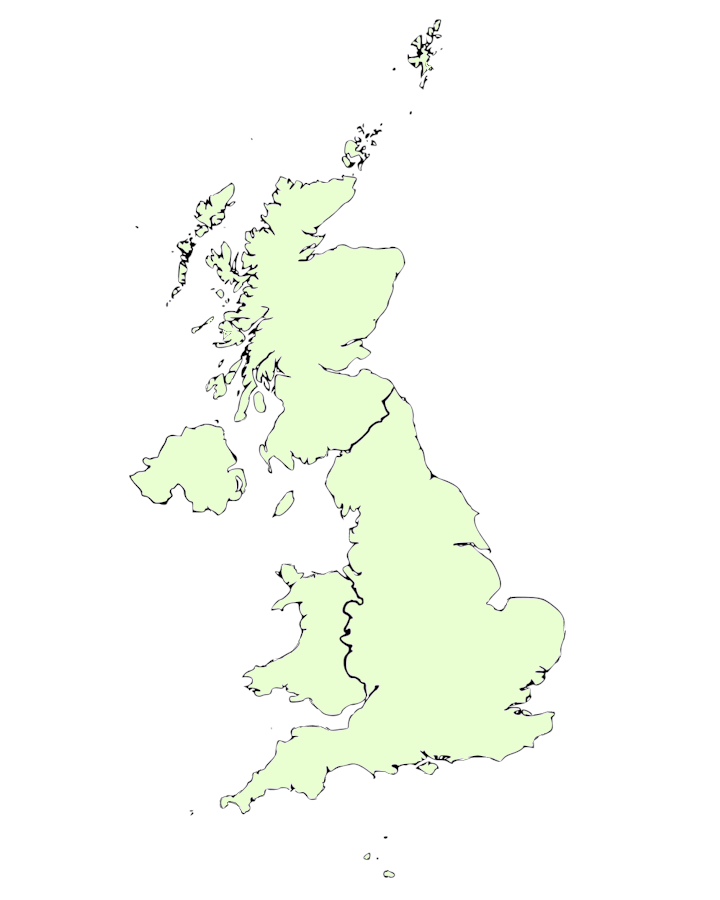
Family Map Hakani in United Kingdom

History of the Surname Hakani
The lineage of the surname Hakani is ancestral and dates back to distant times. Throughout history, this surname has been linked to different territories and traditions of United Kingdom, which has led to its expansion through different geographical areas over the centuries.
Procedure
In order to carry out this research, data has been collected from civil registries, censuses and a variety of sources, both historical and current. These data were carefully organized and analyzed in order to identify the regions where the surname Hakani has a more significant presence, in addition to detecting possible patterns in its distribution.
Results
General Distribution
By looking at the map, you can generally see the distribution of the surname Hakani in the country of United Kingdom. The areas with the greatest prevalence of the surname are highlighted with striking tones, while those with less presence are represented differently.
Region With High Concentration
The areas with the highest concentration of the Hakani surname include various regions of United Kingdom. These regions have historically been important centers of economic and cultural activity, leading to a greater presence of the Hakani surname. The significant presence in these areas may be related to factors such as migration, economy, and other socio-economic aspects.
Scant Offspring
In contrast, territories with a small amount of the surname Hakani tend to be areas far from the city or with a low density of inhabitants. These regions may have experienced little migratory flow or mobility of people with this surname due to different reasons such as geographical conditions, limited economic opportunities or particular social dynamics.
Historical Analysis
In the course of history, the Hakani surname has experienced different dispersion processes in various countries, phenomena influenced by a series of momentous events. Internal and external migrations, armed conflicts and political changes have been determining factors in the geographical distribution of this surname. For example, at certain historical moments an increase or decrease in the presence of the surname in certain regions has been observed, a phenomenon that may be related to particular situations such as migratory movements, wars or government decisions.
Demographic Factors
Migration
The migratory dynamics, both internal and external, have been decisive in the dispersion of the surname Hakani. The arrival of various migrant groups to different areas of United Kingdom has contributed to the increase in the presence of this surname in these regions. Likewise, migration from United Kingdom to other nations has significantly impacted the internal distribution of the surname.
Urbanization
The impact of urbanization has been notable in the concentration of the surname Hakani in urban areas of United Kingdom. The multiple economic and educational opportunities offered by cities have attracted numerous families with the surname Hakani, which has caused a notable increase in their presence in these metropolitan areas.
Sociodemographic Changes
The transformations in the sociodemographic structure of United Kingdom have had a significant impact on the dispersion of the surname Hakani. As an example, the development of certain economic sectors has generated movements of people to areas where these sectors are predominant, which has been reflected in the geographical distribution of the surname.
Distribution of the Surname Hakani in the World
Global Expansion of the Surname Hakani
The Hakani surname not only has roots in United Kingdom, but its presence has spread worldwide, thanks to migratory movements and the diaspora. This section will investigate how the surname Hakani has reached different parts of the globe.
Main Countries of Presence
The surname Hakani has become prominently established in various nations around the world. These countries have witnessed a notable migration from United Kingdom, which has contributed to the expansion and roots of the surname in different cultures. Human mobility for economic, political and educational reasons has played a fundamental role in this phenomenon of dispersion and intercultural enrichment.
 India
India Iran
Iran Morocco
 Albania
 Kuwait
 United States
 Pakistan
 Indonesia
 Algeria
 France
 Netherlands
 Zimbabwe
 Turkey
 Venezuela
 Canada
 Australia
 Sweden
 Thailand
 Zambia
 Afghanistan
 Burkina Faso
 Brazil
 England
 Scotland
 Greece
 Israel
 Italy
Italy Sri Lanka
 Papua New Guinea
Influence of Cultural Diversity
Cultural diversity has been a key element in the global dissemination of the roots of the surname Hakani. Throughout history, important events have led entire communities with this surname to move to different countries. These migrations have been driven by the desire to find new opportunities and improve quality of life.
Overall Conclusion
The surname Hakani has stood out for its ability to adapt and spread throughout the world. Its presence on various continents not only reflects the migratory history of United Kingdom, but also the integration and contribution of those who carry it in different societies globally. The analysis of its distribution provides us with an enriching narrative about how migratory and settlement dynamics have shaped the identity and presence of this surname worldwide.
In summary, the investigation of the distribution of the surname Hakani in United Kingdom and globally reveals fascinating patterns and offers deep insight into the history and demographic evolution of both the country and the global diaspora.


