Map of the Surname Granat in United Kingdom and in the World
Exploring geographic diversity
Immersing yourself in the analysis of the geographical distribution of surnames is like opening a history book, full of stories about migrations, settlements and adaptations over the centuries. In this investigation, we will delve into the exciting world of surnames, in particular the surname Granat, to unravel its mark on United Kingdom and the rest of the world. Through this journey, we will unearth historical connections, demographic clues, and cultural patterns that have shaped the presence of this surname in different regions of the country and globally.
Geographical analysis of the lineage of the Granat family in the territory of United Kingdom

History of the Surname Granat
The lineage of the Granat family dates back to ancient times. This surname has been linked to different territories and civilizations of United Kingdom, which has conditioned its geographical expansion over the centuries.
Procedure
In order to carry out this research, data was collected from various sources such as civil registries, censuses and historical archives. These data were subsequently structured and examined to identify the regions with the greatest predominance of the surname Granat, as well as to detect possible trends or peculiarities in its dispersion.
Results
General Distribution
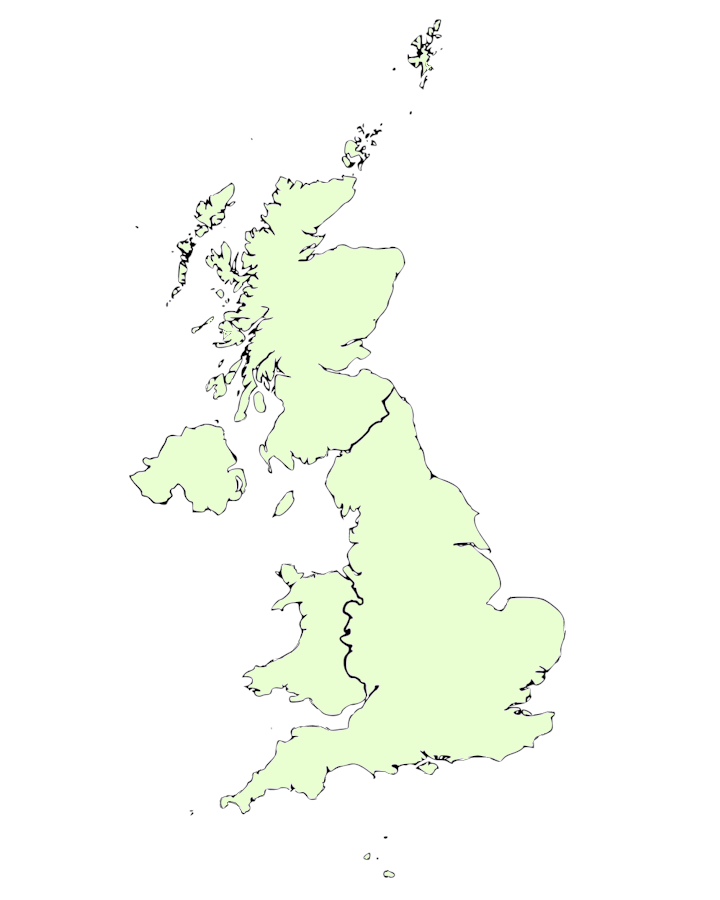
The graphical representation provides an overview of how the surname Granat is distributed in United Kingdom. The areas with the highest incidence stand out in distinctive tones, while the areas with less predominance of the surname are shown in a contrasting way.
Concentration of Lineages in Various Countries
In different nations around the world there are notable concentrations of the surname Granat. These regions have traditionally been recognized as key points in terms of economic and cultural development, which has led to the spread of the surname Granat. This prominence in specific areas can be influenced by phenomena such as migration, economic activity and other sociocultural factors.
Regions with Low Concentration
In contrast, in the territories with less representation of the surname Granat we find those located in rural areas or areas with low population density in the country United Kingdom. These regions may have experienced less immigrant influence or less mobility of individuals with this surname, largely due to geographical, economic or social aspects.
Historical Analysis
In historical terms, the spread of the Granat surname into United Kingdom has been affected by various highly relevant events, such as internal and external displacements, war conflicts and changes in the political landscape. For example, throughout certain periods in the past, an increase or decrease in the presence of the surname in certain geographical areas can be seen. This phenomenon may be related to particular situations such as migrations, wars, or specific government decisions.
Socio-Demographic Factors
Mobility
Internal and external mobility has had a significant impact on the dispersion of the surname Granat. The arrival of various migrant groups to different areas of United Kingdom has contributed to the expansion of this surname in those locations. Likewise, emigration from United Kingdom to other countries has influenced the internal distribution of the surname.
Urban Development
In the current context, the phenomenon of urban development has led to a marked concentration of the surname Granat in urban areas of United Kingdom. The job and educational possibilities in these urban centers have attracted numerous families with the surname Granat, which has generated a notable increase in their presence in these metropolitan areas.
Changes in Society and Economy
The evolution of society and economy in United Kingdom has had a significant impact on the way the surname Granat is distributed. This transformation is evident in the movement of population to areas where specific sectors are booming, which is clearly reflected in the geography of the surname.
Distribution of the Surname Granat in the World
Global Expansion of the Surname Granat
The surname Granat is not only rooted in United Kingdom, but its presence extends throughout the globe thanks to migratory movements and the dispersal of families. In this section we will explore how and why the surname Granat has found its way to different regions of the planet.
Main Countries of Presence
The surname Granat is recognized in various countries around the world. The migration from United Kingdom has contributed significantly to the spread of this surname in different territories. Over the years, the search for economic, political or educational opportunities has played a fundamental role in the expansion of this lineage.
 Poland
 United States
 Sweden
 Ukraine
 Russia
 France
 Finland
 Denmark
 Canada
 England
 Mexico
 South Africa
 Croatia
 Austria
 Norway
 Belarus
 Scotland
 Kazakhstan
 Australia
 Switzerland
 Syria
Syria Spain
Spain Argentina
 Estonia
 Belgium
 Germany
 Slovakia
 Kuwait
 Azerbaijan
 Israel
 Venezuela
 Wales
Wales South Korea
 Luxembourg
 Transnistria
 New Zealand
 Panama
 Romania
 Chile
Chile China
China Czech Republic
 Thailand
 Turkey
 Egypt
Egypt Greece
 Hungary
 Italy
Italy Japan
Japan
Influence of International Migration
International migration has had a significant impact on the dispersion of the surname Granat throughout the world. Throughout history, various events have led to the migration of individuals with this surname to different territories, crossing oceans and borders in search of new opportunities and horizons.
The legacy of the surname Granat has spread to different countries and cultures, enriching the diversity and multiplicity of identities in every corner of the planet. This phenomenon has contributed to global interconnection and the exchange of traditions, values and experiences between people of different origins.
International migration has not only impacted the geographical dispersion of the surname Granat, but has also shaped its history and evolution over time. The stories of migrants and their descendants reveal the strength of human will and the ability to adapt in the face of challenges and adversity.
In short, international migration has left an indelible mark on the history of the surname Granat, transforming it into a symbol of resilience, diversity and unity in an increasingly interconnected and multicultural world.
Overall Conclusion
The surname Granat has demonstrated an outstanding capacity for adaptation and expansion throughout the world. Its presence on various continents not only reflects the migratory history of United Kingdom, but also the fusion and contributions of those who wear it in different societies globally. The study of its dispersion offers us an enriching narrative about how migration and settlement flows have shaped the identity and representation of this surname worldwide.
In summary, exploring the distribution of the Granat surname in United Kingdom and around the world reveals fascinating patterns and provides us with deep insights into the history and demographic evolution of both the country and the dispersed global community.
Andere Sprachen


