Map of the Surname Flamank in United Kingdom and in the World
Exploring the distribution of surnames
The investigation of the geographical location of surnames offers us a fascinating look at the past, movement and establishment of lineages through generations. In this investigation, we will analyze the distribution of the Flamank lineage in the territory of United Kingdom and internationally, unraveling historical chains and demographic currents that have forged its presence in different areas of the country and throughout the globe.
Map of the Distribution of the Surname Flamank in United Kingdom

Origin of the Surname Flamank
The history of the surname Flamank is a story that goes back to ancient times. Over the centuries, this surname has been closely linked to different regions and traditions of United Kingdom, which has contributed to its wide geographical presence throughout history.
Procedure
In order to carry out this research, information was collected from civil archives, censuses and other sources, both ancient and current. The data was organized and carefully examined to determine the areas with the greatest presence of the surname Flamank, as well as to discover any relevant trends in its dispersion.
Results
Geographic Analysis
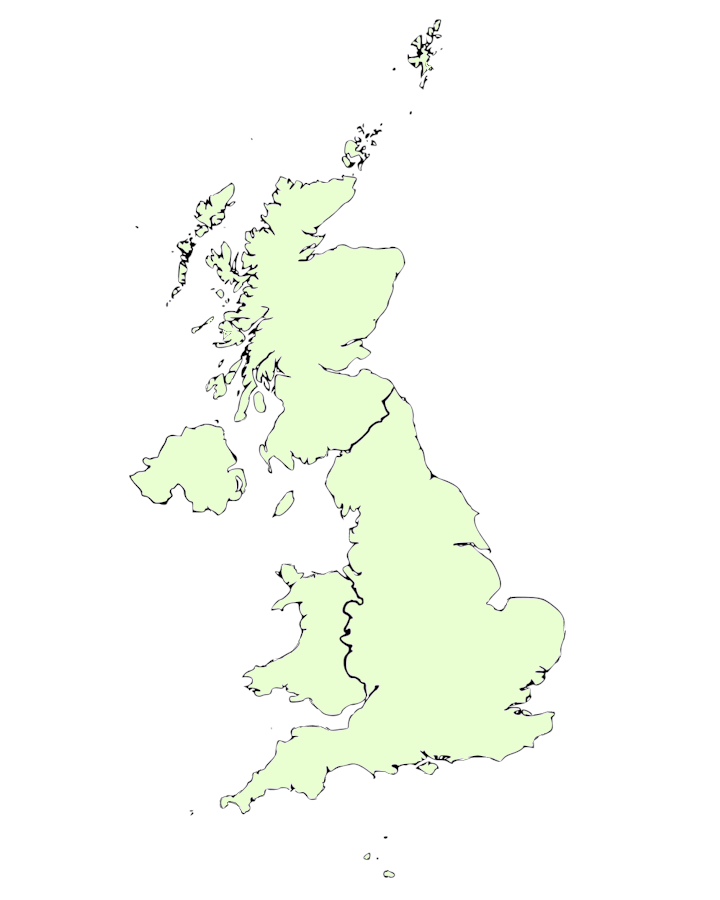
In the following map you can see a graphic representation of the distribution of the surname Flamank in the territory of United Kingdom. Here the areas where there is a greater incidence of the surname are highlighted with differentiated tones, while in those places where its presence is scarce, it is shown in a different way.
Regions with High Concentration
The areas where surnames similar to that of the Flamank family predominate are varied in United Kingdom. These places have traditionally been relevant in terms of economic and cultural development, which has led to a greater presence of the surname Flamank in the region. The notable number of individuals with this surname in these regions can be attributed to different factors, including migration, economics, and other socioeconomic dynamics.
Countries with Little Presence
On the other hand, the countries with the least presence of the Flamank surname are those that are less developed or have a lower population density. These countries may have experienced less migration or mobility of people with this surname due to factors such as history, economy or culture.
Genealogical Analysis
Since ancient times, the presence of the surname Flamank in United Kingdom has been shaped by various events that have left an indelible mark on history. In this way, phenomena such as migratory movements, war conflicts and political changes have left a mark on the geographical distribution of the surname over the centuries. It is interesting to observe how in certain historical periods an increase or decrease in the frequency of the surname can be seen in certain areas, which can be related to factors as varied as population displacements, armed confrontations or government decisions.
Demographic Factors
Migration
The mobility of people, both within and outside the borders of United Kingdom, has significantly influenced the dispersion of the surname Flamank. The arrival of various migrant groups to different areas of United Kingdom has contributed to the spread of the surname in those places. On the other hand, emigration from United Kingdom to other countries has also had a significant impact on the internal distribution of the surname.
Urbanization
Over time, the phenomenon of urbanization has led to a marked concentration of the Flamank surname in the urban areas of United Kingdom. The growth dynamics of these cities have generated an environment conducive to economic and educational development, attracting families with the surname Flamank and thus contributing to their greater presence in these metropolitan areas.
Socioeconomic Changes
The evolution of the socioeconomic structure in United Kingdom has had a significant impact on the dispersion of the surname Flamank. For example, the growth of certain industries has generated population movements towards areas where they are of greater importance, which is manifested in the geographical distribution of the surname.
Distribution of the Surname Flamank in the World
Global Expansion of the Surname Flamank
The Flamank surname is not limited only to the country of origin, but has managed to spread widely throughout the planet thanks to migratory movements and the diaspora. Throughout history, the surname Flamank has found a place in different regions of the world, adapting to new cultures and realities.
The presence of the surname Flamank in different countries demonstrates the ability to adapt and the diversity of this family throughout the generations. From Europe to Asia, and from America to Oceania, the surname Flamank has left its mark in multiple corners of the globe, evidencing the richness of its roots and the influence of its ancestors.
Every corner of the world where the surname Flamank is found tells a unique and valuable story about migration, integration and cultural diversity. The global expansion of the Flamank surname is a reflection of humanity's shared history and the ability of families to adapt and thrive in any environment.
Main Countries of Presence
The surname Flamank is recognized in various corners of the world. This notoriety has been consolidated in different territories thanks to the migration from United Kingdom, which has led to a notable growth of the surname in these countries. Human mobility motivated by economic, political and educational issues has been decisive in the global expansion of the surname Flamank.


Influence of International Migration
International migration has had a significant impact on the global dispersion of surnames. Throughout history, crucial events have caused massive movements of individuals with the surname Flamank to various regions of the world. This phenomenon has been driven by the aspiration to improve prospects and quality of life.
Overall Conclusion
The surname Flamank has shown an extraordinary capacity for adaptation and diffusion throughout the planet. Its presence on numerous continents is not only a reflection of the migratory history of United Kingdom, but also of the integration and contribution of those who carry it in various societies at a global level. Examining its dispersion provides us with an enriching narrative about how migratory flows and settlement processes have shaped the identity and position of this surname on the world stage.
In sum, the analysis of the distribution of the surname Flamank in United Kingdom and internationally reveals fascinating patterns and offers a deep perspective on the history and demographic evolution of both the country and the global diaspora.


