Map of the Surname Few in United Kingdom and in the World
Exploring the geography of surnames
Immersing ourselves in the study of the geographical distribution of surnames allows us to unravel the intricate network of historical and migratory connections that have shaped our family identities over the centuries. In this investigation, we will delve into the exciting universe of the surname Few, analyzing its presence in United Kingdom and in the rest of the world. We will discover how factors such as colonization, urbanization and human mobilizations have shaped the dispersion patterns of this surname, giving us valuable clues about the evolution of the communities and societies in which it has taken root.
Analysis of the Presence of the Surname Few in the Territory of United Kingdom

History of the Surname Few
The genealogy of the Few surname goes back to ancient times. Throughout history, this surname has been closely linked to different areas and traditions of United Kingdom, a determining factor in its wide geographical distribution over generations.
Data exploration
In order to carry out a comprehensive analysis, information has been compiled from various sources such as civil registries, censuses and historical and contemporary archives. These data have been systematized and examined in detail to identify the regions with the greatest presence of the Few surname, as well as to identify possible notable patterns in its geographical dispersion.
In addition, an international comparative study has been carried out to observe how the surname Few is distributed in different countries around the world. This comparison will allow us to evaluate whether there are significant differences in the presence of the surname Few according to the United Kingdom of residence of the people.
Results
General Distribution
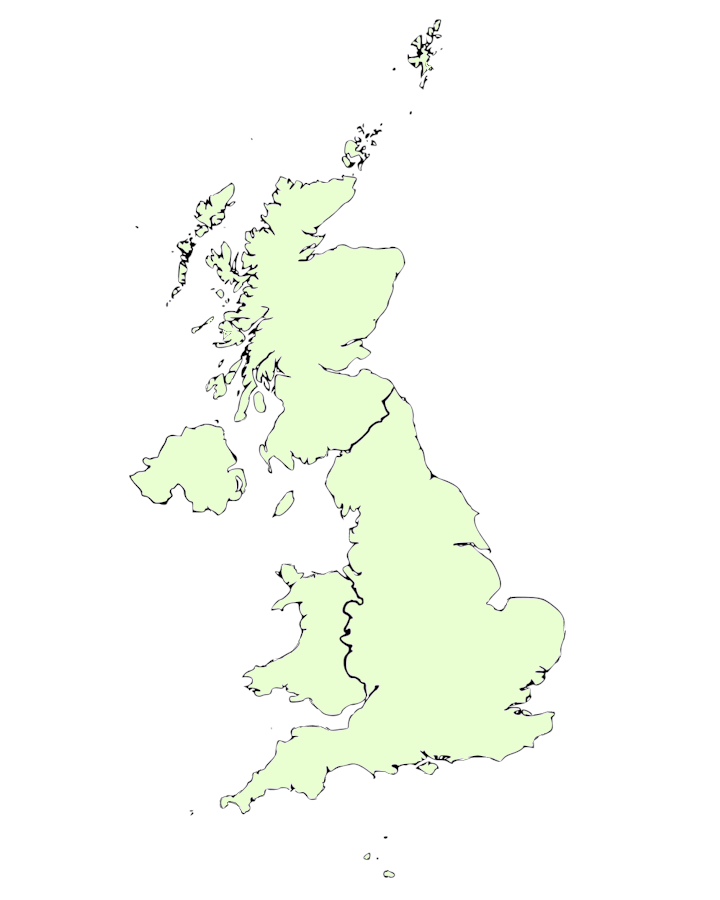
By looking at the map, you can generally see the distribution of the surname Few in the country United Kingdom. The areas with greater predominance are shown with more intense tones, while those with a less marked presence of the surname are represented with different shades.
Regions with High Concentration
High concentrations of the surname Few can be found in different regions of United Kingdom. These areas are recognized for their important economic and cultural activity throughout history, which has contributed to the prominent presence of the surname Few in these areas. The relevance of this surname in these regions may be linked to phenomena such as migration, the economy and other socioeconomic aspects that influence the population composition.
Regions with Low Concentration
On the other hand, in the territories with less predominance of the surname Few are those areas that are further away from urban centers or with a smaller population. It is possible that in these areas there has been a lower arrival of immigrants or displacement of individuals with this surname, influenced by factors such as the topography of the land, the level of economic development or the social dynamics present.
Genealogical Analysis
Genetically, the distribution of the Few surname into United Kingdom has been shaped by a series of key factors, such as both internal and external migrations, armed conflicts and transformations in the political landscape. For example, at certain historical moments, an increase or decrease in the presence of the surname in certain geographical areas can be seen. This can be directly related to particular events such as population displacements, wars, or government decisions.
Demographic Factors
Migration
The mobility of people both within and outside the borders of United Kingdom has had a significant impact on the dispersion of the surname Few. The arrival of various migrant groups to different areas of the country has contributed to increasing the presence of the surname in these areas. Likewise, emigration from United Kingdom to other nations has also influenced the internal distribution of the surname.
Urbanization
Urbanization has caused a notable increase in the presence of the surname Few in urban areas of United Kingdom. The work, educational and leisure possibilities offered by these cities have been the perfect magnet for families with the surname Few to establish themselves in these metropolitan areas, thus contributing to their growth and cultural diversity.
Changes in Culture and Economy
The evolution of culture and economy in United Kingdom has had a significant impact on the way the surname Few is distributed in the population. In particular, the growth of certain economic sectors has generated movements of people to areas where these industries are predominant, which is reflected in the geographical dispersion of the surname.
Distribution of the Surname Few in the World
Global Expansion of the Surname Few
The lineage of the Few family is not limited only to the territory of United Kingdom, but has managed to spread throughout the planet thanks to migratory movements and the dispersion of its members for various reasons. In this section, we will explore how and why the surname Few has managed to settle in different corners of the globe, thus contributing to the diversity and richness of humanity's cultural heritage.
Main Countries of Presence
The surname Few is known in various regions of the world, being especially prominent in some particular countries. The influence of this surname has transcended borders, thanks to the migration from United Kingdom, which has contributed to its roots in different cultures and societies. Human mobility motivated by economic, political and educational reasons has been decisive in the international expansion of this surname.
 United States
 England
 South Africa
 Canada
 Australia
 Nothern Ireland
 Wales
Wales India
India New Zealand
 Pakistan
 Scotland
 Ireland
 Spain
Spain France
 Mauritania
 Bermuda
 China
China Thailand
 Nigeria
 Hong Kong
 Malaysia
 Netherlands
 Uganda
 Iraq
Iraq Iran
Iran Italy
Italy Kenya
Kenya South Korea
 Kazakhstan
 Liberia
 United Arab Emirates
 Libya
Libya Argentina
 Mauritius
 Azerbaijan
 Mexico
 Switzerland
 Cameroon
 Norway
 Colombia
 Germany
 Puerto Rico
 Denmark
 Serbia
 Algeria
 Singapore
 Taiwan
 Venezuela
 Georgia
 Zimbabwe
 Guernsey
 Croatia
Influence of Origin and Destination on Global Distribution
The impact of international migration on the dispersion of the surname Few is undeniable. Throughout history, its presence in different corners of the world has been the result of crucial events that have led to large-scale displacements to various countries. This phenomenon has been driven by the aspiration to achieve new goals and improve quality of life.
Global Conclusion
The surname Few has demonstrated a remarkable capacity for adaptation and dispersion throughout the world. Its presence on multiple continents reflects not only the migratory history of United Kingdom, but also the integration and contribution of its carriers in various global societies. The analysis of its distribution offers a rich narrative about how the global dynamics of migration and settlement have shaped the identity and presence of this surname in the world.
In summary, the study of the distribution of the surname Few in United Kingdom and worldwide reveals interesting patterns and offers a deep perspective on the history and demographic evolution of both the country and the global diaspora.


