Map of the Surname Fendel in United Kingdom and in the World
Exploring the history behind surnames
Immersing ourselves in the analysis of the geography of surnames takes us on a fascinating journey through time, unraveling the migrations and settlements that have shaped our family histories. In this investigation, we will delve into the distribution of the Fendel surname, both in United Kingdom and in various corners of the planet, unearthing historical patterns and discovering the demographic trends that have left their mark on the presence of this surname in different local regions and globally.
Map of the Presence of the Fendel Lineage in the Territory of United Kingdom

Origin of the Surname Fendel
The surname Fendel is an ancestral legacy that has been forged over the centuries. Its history is intertwined with the roots of United Kingdom, witnessing the diversity and cultural richness of this land that has left its mark on its identity.
Research
To carry out this research, data was collected from different sources such as public records, surveys, and historical and current databases. These data were processed and evaluated with the aim of identifying the regions where the surname Fendel has a greater presence, as well as to detect possible trends in its geographical distribution.
Results
General Distribution
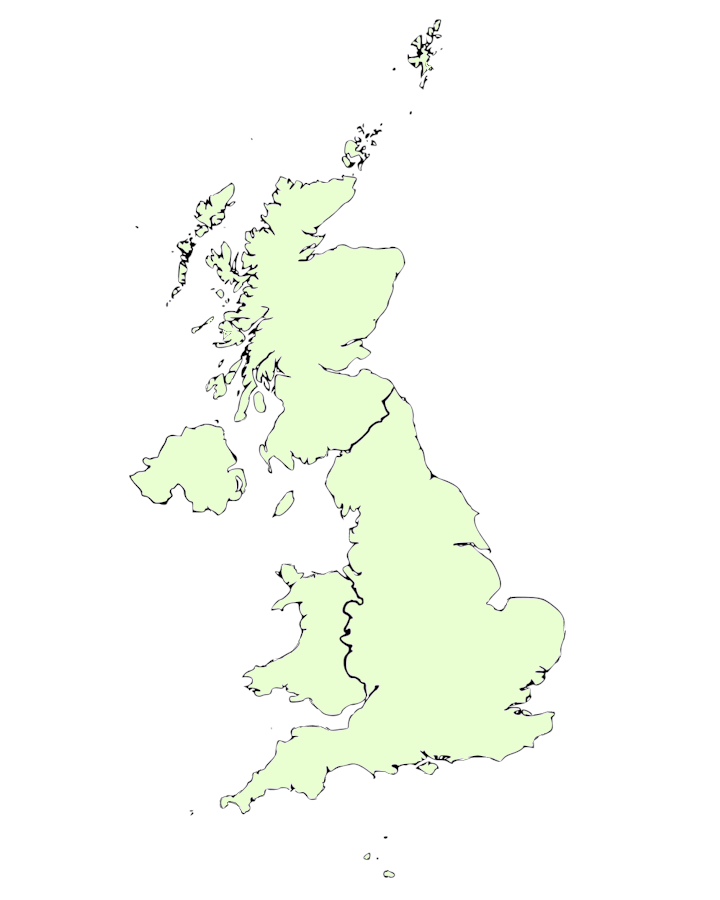
In the graph you can generally see the dispersion of the surname Fendel in the territory of United Kingdom. Places with a high density of this surname are highlighted in vibrant tones, while areas with a lower presence are identified differently.
Regions with High Concentration
Among the areas of greatest concentration of the surname Fendel are several geographical points of United Kingdom. These areas have been recognized throughout history as epicenters of economic and cultural activity, which has led to a greater incidence of the surname Fendel. The abundant presence in these places may be linked to factors such as human mobility, economic dynamics and other socioeconomic elements that have shaped their development.
Underrepresented Areas
On the contrary, the places with the least presence of the Fendel surname tend to be those that have a low population density or that are more rural. In these places, it is possible that the migration or mobility of people with that surname has been limited due to various factors, such as geography, job opportunities or sociocultural factors.
Historical Analysis
Since ancient times, the spread of the surname Fendel into United Kingdom has been shaped by a series of momentous events, such as internal and external migratory movements, war conflicts and significant political changes. During different historical periods, a variation is evident in the presence of the surname in different geographical areas. This phenomenon may be related to specific events such as population displacements, wars, or government decisions.
Demographic Factors
Migration
The mobility of people both within and outside the borders of United Kingdom has had a significant impact on the dispersion of the surname Fendel. Various migratory flows have contributed to the presence of the surname in different parts of the country, thus enriching the cultural and demographic diversity of the region.
Likewise, the emigration of inhabitants of United Kingdom to other countries has had an impact on the distribution of the surname internationally, creating transnational connections and expanding the global reach of the family history marked by the surname Fendel.
Urbanization
The urbanization trend has caused a notable agglomeration of the surname Fendel in the urban areas of United Kingdom. The job and academic possibilities in these cities have been the magnet for those bearers of the surname Fendel, thus increasing their representation in these metropolitan centers.
Socioeconomic Changes
The transformations in the socioeconomic organization of United Kingdom have had a significant impact on the dispersion of the surname Fendel. To mention one case, the flourishing of certain economic sectors has generated migrations of people to areas in which these sectors are dominant, which is reflected in the territorial distribution of the surname.
Distribution of the Surname Fendel in the World
Global Expansion of the Surname Fendel
The lineage of Fendel is not only rooted in United Kingdom, but has also managed to expand worldwide thanks to migratory movements and diasporic groups. In this section, we will analyze how and why the surname Fendel has managed to establish itself in various regions of the planet.
Main Countries of Presence
The surname Fendel is recognized in multiple nations around the world. Various countries have witnessed the growing migration of families from United Kingdom, which has contributed to the spread and roots of the surname in different territories. The search for better job opportunities, political stability or the search for quality education have been determining reasons for this dispersion phenomenon.
 Germany
 Russia
 United States
 Brazil
 Kazakhstan
 Australia
 France
 Netherlands
 England
 Venezuela
 Israel
 Ukraine
 Austria
 Bulgaria
 Canada
 Switzerland
 Czech Republic
 Spain
Spain Sweden
 Tajikistan
Influence of International Migration
International migration has had a significant impact on the global dispersion of the Fendel surname. Throughout history, various events have caused large movements of people with this surname to different regions of the world. These displacements have been driven by the search for new perspectives and contexts of life.
International migration has not only contributed to the spread of the surname Fendel, but has also enriched cultural diversity in different countries. Through interaction with other cultures, those who bear this surname have contributed their traditions and customs, creating a unique fusion of identities.
In addition, international migration has promoted the exchange of knowledge and experiences between people with the surname Fendel, fostering collaboration and development in various areas. In this way, a global network of individuals has been created who share a common bond through their surname and their country of origin.
Overall Conclusion
The surname Fendel has stood out for its remarkable capacity for adaptation and dispersion throughout the world. Its presence on various continents not only reflects the migratory history of United Kingdom, but also the integration and contributions of those who wear it in different societies globally. The analysis of its distribution tells us a fascinating story about how migratory currents and settlement processes have influenced the identity and presence of this surname worldwide.
In summary, the study of the distribution of the Fendel surname both in United Kingdom and on a global scale reveals intriguing patterns and gives us a deep insight into the history and demographic evolution, both of the country and the global diaspora.


