Map of the Surname Fath in United Kingdom and in the World
Exploring Origins
Diving into the analysis of how surnames are distributed geographically allows us to draw a fascinating timeline that reveals the history of migrations and settlements of families over the centuries. In this study, we will delve into the distribution of the Fath surname both in United Kingdom and worldwide, unraveling historical patterns and demographic trends that have shaped its presence in different regions of the country and on the global landscape.
Study of the presence of the Surname Fath in the territory of United Kingdom

Origin of the Surname Fath
The lineage of the Fath family comes from ancient times in history. Over the centuries, this surname has been linked to different localities and traditions of United Kingdom, which has contributed to its wide dissemination throughout different countries and continents.
Deep Exploration
In seeking to understand the history and cultural diversity of United Kingdom, we delve into the methodology of collecting information from civil registries, censuses and other relevant sources. These data were meticulously organized and analyzed to reveal the areas where the surname Fath is most concentrated, as well as to discover possible patterns in its geographic distribution.
Results
General Distribution
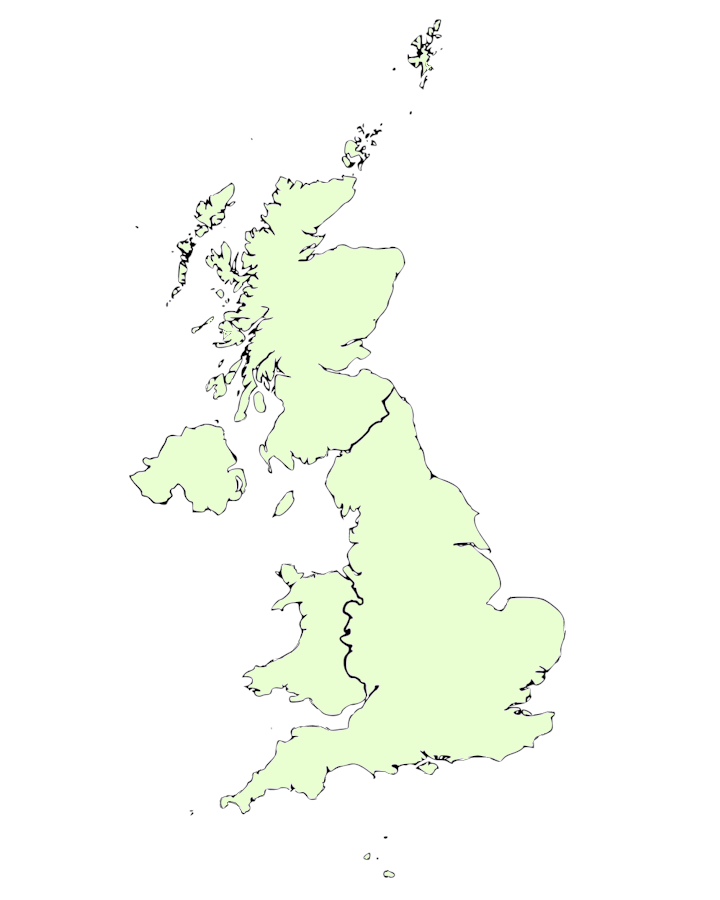
By looking at the map you can see a global perspective of how the surname Fath is distributed in the country United Kingdom. The areas where the surname is most predominant can be clearly identified, highlighted in striking colors, while the areas with less presence are shown differently.
Geographic Concentration
In different areas of United Kingdom a high concentration of the surname Fath can be observed. These areas, throughout history, have been key points in terms of commercial, social and cultural activity, which has contributed to a greater presence of the Fath family. This notable presence in these regions may be linked to variables such as migratory movements, economic conditions and other relevant sociocultural factors.
Areas with Low Presence
On the contrary, the places where the surname Fath has a lower representation tend to be areas with low population density or areas further away from urban centers. In these places, it is possible that the migration or mobility of people with this surname has been limited due to various factors such as geographical location, job opportunities or social dynamics.
Historical Analysis
Historically, the dispersion of the Fath surname into United Kingdom has been shaped by a variety of determining factors, including both internal and external migratory movements, war conflicts and political transformations. It is interesting to note how over the centuries, the surname Fath has experienced fluctuations in its presence in different geographical areas of United Kingdom. These variations may be closely related to specific events such as mass migrations, armed conflicts, or changes in government structures.
Sociodemographic factors
Movement
Internal and external displacement has had a significant impact on the dispersion of the Fath surname. The arrival of various groups displaced to different areas of United Kingdom has contributed to the increase in the presence of the surname in these areas. Likewise, migration from United Kingdom to other countries has also modified the internal distribution of the surname.
Urbanization
The evolution towards an increasingly urbanized society has caused a notable concentration of the surname Fath in different cities of United Kingdom. The attraction of work and educational opportunities in urban spaces has motivated numerous families carrying the surname Fath to settle in these metropolitan areas, significantly increasing their presence in these environments.
Changes in Culture and Economy
The evolution of culture and economy in United Kingdom has had a significant impact on the way the surname Fath is distributed in the population. In particular, the growth of certain economic sectors has generated movements of people to areas where these industries are predominant, which is reflected in the geographical dispersion of the surname.
Distribution of the Surname Fath in the World
Global Expansion of the Surname Fath
The lineage of the Fath family has transcended borders and has taken root in various corners of the planet, leaving a deep mark on the history of humanity. Over the centuries, migration and diaspora have been key catalysts in the spread of this surname beyond the borders of United Kingdom.
From the remote corners of Asia to the bustling cities of America, the surname Fath has found fertile ground in every corner of the globe. This geographical dispersion has given rise to a rich variety of family stories and traditions, enriching the cultural diversity of each country that has welcomed the bearers of this illustrious surname.
On every continent, in every country, the surname Fath weaves an invisible web that connects distant relatives with each other, reminding them of their common origin and shared legacy. Through these myriad connections, the Fath family continues to grow and evolve, adapting to the changing circumstances of a globalized world.
Main Countries of Presence
The surname Fath is recognized in various nations around the world. In these countries, migration from United Kingdom has greatly contributed to the spread and roots of the surname in their territories. The search for job opportunities, the search for a new beginning or simply the curiosity to discover new cultures have been some of the reasons that have driven this migration.
 Iran
Iran Sudan
Sudan Egypt
Egypt Yemen
Yemen Morocco
 Germany
 United States
 Saudi Arabia
 France
 Indonesia
 Syria
Syria Pakistan
 Brazil
 Canada
 Iraq
Iraq Austria
 Qatar
Qatar Kuwait
 Oman
Oman Jordan
 Argentina
 Switzerland
 New Caledonia
 India
India Democratic Republic of the Congo
 England
 Spain
Spain United Arab Emirates
 South Africa
 Russia
 Hungary
 Philippines
 Italy
Italy Australia
 China
China Turkey
 Malaysia
 Afghanistan
 Tunisia
 Belgium
 Uzbekistan
 Chile
Chile Nigeria
 Greece
 Slovakia
 Maldives
 Netherlands
 Sweden
 Japan
Japan Algeria
 Norway
 Ireland
 Singapore
 Somalia
 Jamaica
 Tajikistan
 Liechtenstein
 Liberia
 Lesotho
 Libya
Libya Zimbabwe
 Monaco
 Cameroon
 New Zealand
 Finland
 Panama
 Scotland
 Guernsey
 Poland
 Portugal
 Hong Kong
 Croatia
 Solomon Islands
Influence of International Migration
International migration has had a significant impact on the global dispersion of surnames. Throughout history, momentous events have caused massive movements of people with the surname Fath to various countries on different continents. These migrations have been driven by the aspiration to improve the prospects and well-being of those who bear it.
Overall Conclusion
The Fath lineage has demonstrated a phenomenal capacity for adaptation and expansion in various corners of the planet. Its presence in multiple regions not only reflects the tumultuous migratory history of United Kingdom, but also the integration and contributions of those who carry this surname in different societies worldwide. Analyzing its dispersion gives us an interesting narrative about how migratory movements and settlement processes have shaped the identity and representation of this surname throughout the globe.
In conclusion, examining the presence of the surname Fath in United Kingdom and on a global scale reveals fascinating patterns and provides us with deep insight into the history and demographic trends of both that country and the dispersed global community.


