Map of the Surname Faraz in United Kingdom and in the World
Exploring the geography of surnames
Immersing ourselves in the study of the geographical distribution of surnames allows us to unravel the intricate network of historical and migratory connections that have shaped our family identities over the centuries. In this investigation, we will delve into the exciting universe of the surname Faraz, analyzing its presence in United Kingdom and in the rest of the world. We will discover how factors such as colonization, urbanization and human mobilizations have shaped the dispersion patterns of this surname, giving us valuable clues about the evolution of the communities and societies in which it has taken root.
Geographical Analysis of the Surname Faraz in United Kingdom
History of the Surname Faraz
The genealogy of the surname Faraz transports us to distant times. Throughout history, this surname has been linked to different territories and traditions of United Kingdom, which has marked its geographical extension over the centuries.
Geographical Exploration
To carry out this study, data were collected from civil registries, censuses and other historical and contemporary sources. These data were processed and analyzed to identify the regions with the greatest presence of the surname Faraz, as well as to identify possible trends in its geographical distribution.
Results
General Distribution
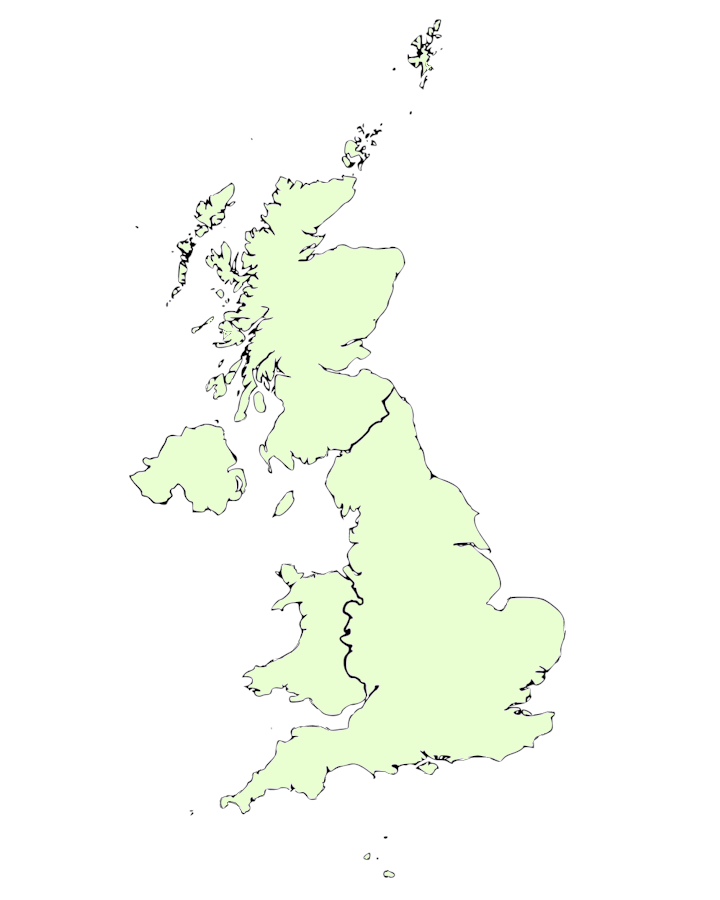
The following map illustrates in a general way the geographical distribution of the surname Faraz in the country United Kingdom. You will be able to observe the areas where the concentration of this surname is more notable, represented in more intense tones, as well as those areas where its presence is scarcer, identified in a different way.
Where is the Surname Faraz Concentrated?
The regions with a high concentration of the surname Faraz cover different areas of United Kingdom. These areas have been traditionally recognized for their relevance in economic and cultural spheres, which has contributed to the prominence of the surname Faraz. Prominence in these territories can be linked to various factors such as migration, economic situation and other sociocultural aspects.
Underrepresented Communities
On the contrary, areas with a low presence of the surname Faraz are those that are generally characterized by being more remote or less densely populated. It is in these places where the surname Faraz tends to be less common, either due to the absence of immigration or the low mobility of people with this surname, perhaps influenced by geography, job opportunities or social context.
Historical Analysis
Since ancient times, the evolution of the surname Faraz into United Kingdom has been marked by a series of momentous events that have left their mark on history. Mass migrations, war conflicts and changes in the political landscape have significantly influenced the distribution and presence of this surname in different times and places. For example, at certain times in history there have been increases or decreases in the prevalence of the surname in certain regions, which is usually closely linked to reasons such as migratory movements, armed confrontations or government decisions.
Demographic Factors
Migration
The migratory phenomenon, both internally and externally, has been decisive in the dispersion of the surname Faraz in different areas of United Kingdom. The arrival of various migrant groups to different regions of United Kingdom has contributed significantly to the spread of the surname in these geographical areas. Likewise, emigration from United Kingdom to other countries has influenced the internal distribution of the surname, expanding its borders and increasing its presence in different corners of the world.
Urbanization
Urban expansion has caused a notable concentration of the surname Faraz in urban areas of United Kingdom. The economic and educational benefits that these cities offer have attracted families with the surname Faraz, which has caused a significant increase in their presence in these metropolitan areas.
Socioeconomic Changes
It is interesting to analyze how changes in the socioeconomic structure of United Kingdom have had a direct impact on the distribution of the surname Faraz. We can observe that the development of certain industries has generated population movements towards areas where these sectors are predominant, which is clearly reflected in the geography of the surname.
Distribution of the Surname Faraz in the World
Global Expansion of the Surname Faraz
The surname Faraz transcends borders and spreads throughout the world, leaving an indelible mark in every corner where it is established. From United Kingdom to the most remote corners, the presence of the surname Faraz is synonymous with diversity and cultural richness.
The story behind the global expansion of the surname Faraz is fascinating, marked by the bravery of those who ventured into unknown lands in search of new opportunities. Over the centuries, the surname Faraz has witnessed times of mass migration, wars and revolutions that have contributed to its dispersion throughout the planet.
Today, the surname Faraz not only represents a connection to United Kingdom, but is also a symbol of the global interconnectedness that defines our modern world. Through diaspora and integration into different cultures, the surname Faraz has managed to transcend linguistic barriers and geographic borders.
Main Countries of Presence
The surname Faraz is internationally recognized for its wide presence in different territories around the world. The historical and cultural ties with United Kingdom have led to a continuous migration of people carrying this surname to different regions, thus contributing to its global expansion. The diversity of reasons that have driven this migration, whether for work, family or study reasons, has played a fundamental role in consolidating the presence of the surname Faraz in various countries.
 Pakistan
 Iran
Iran Saudi Arabia
 India
India United Arab Emirates
 Afghanistan
 England
 Yemen
Yemen Iraq
Iraq United States
 Qatar
Qatar Kuwait
 Canada
 Oman
Oman Indonesia
 Sweden
 Argentina
 Brazil
 Malaysia
 Australia
 Thailand
 Turkey
 Germany
 Sri Lanka
 Bangladesh
 China
China Hong Kong
 Netherlands
 Norway
 Denmark
 South Africa
 Luxembourg
 Mauritius
 Maldives
 Belgium
 Bahrain
 Singapore
 Belarus
 Somalia
 Belize
 Syria
Syria Switzerland
 Czech Republic
 Vietnam
 Algeria
 Nothern Ireland
 Scotland
 Ireland
Influence of Cultural Diversity in the World
Cultural diversity at the international level has contributed significantly to the country's wealth United Kingdom. Throughout history, various migrations of people with different surnames, including the surname Faraz, have enriched the culture and traditions of this country. These movements have been driven by curiosity, the search for new experiences and the exploration of new frontiers.
Overall Conclusion
The surname Faraz has demonstrated an impressive capacity for adaptation and expansion in different corners of the planet. Its presence in various countries is not only related to the migratory history of United Kingdom, but also highlights the integration and contributions of those who carry it in different international societies. The analysis of its dispersion offers an enriching story about how migratory flows and settlement experiences have influenced the identity and presence of this surname on a global level.
In summary, research on the distribution of the surname Faraz both in United Kingdom and throughout the world reveals fascinating patterns and provides an in-depth look at the history and demographic transformation of both the country and the global community.


